
Standing-Desk Habits for Small Spaces: Tips and Conditions

📖 Table of Contents
I still remember the first time I tried to convert my tiny 4x4 foot home office into a standing desk setup. My back ached for days, my legs felt like they were on fire, and I was convinced standing was the worst idea I'd ever had. But over time, I found that the right standing-desk habits for small spaces could actually transform how I felt — physically, mentally, and even creatively. It wasn’t just about standing; it was about making it work for my body and my cramped layout.
I spent weeks experimenting with different heights, angles, and even makeshift solutions like books and old laptops. It wasn’t until I learned to focus on micro-movements, posture, and smart placement that I began to see real, lasting benefits. The key wasn’t just standing itself — it was the specific habits I formed around it. And that’s what this article is about: standing-desk habits that condition the body even in the smallest of spaces.
Today, I can sit for 45 minutes, stand for 15, and walk for 5 without feeling like I’ve been in a war zone. My posture is better, my focus is sharper, and I even get more done in less time. If you're in a small space and trying to make standing work for you, I’ve got the real, tested strategies to help you thrive — not just survive.[1]
Why You'll Love This Standing-Desk Routine
- Improved posture and reduced back pain in as little as two weeks
- Increased productivity and mental clarity with strategic movement breaks
- No need for large spaces or expensive equipment — it’s all about technique
- A sustainable, long-term habit that conditions your body for better health
The First Step: Measuring Your Space and Yourself
As of November 2026, I measured my height, shoulder width, and arm length with a tape measure, and then I mapped out the exact dimensions of my room. This helped me understand exactly where to place my desk and where I needed to move. In my case, I found that a standing desk height of 36 inches worked best for me — just enough to keep my elbows at 90 degrees while typing.[2]
Even small spaces can accommodate a standing desk if you’re intentional about it. I used a wall-mounted monitor to save floor space and placed my keyboard on a small, raised platform that kept my hands at the correct height. It took time, but it made all the difference.
I recommend measuring your body and your room before making any changes. That way, you’ll know exactly what you need — and what you can do without. I found that a small space can be turned into a functional, healthy workspace with the right planning and tools.[3]
Take a tape measure and record your height, arm length, and shoulder width. Use these numbers to determine your ideal standing desk height. Measure your space to see where your desk can go and where you’ll need to be flexible.
Part of our Standing desk habits by age condition guide.
Standing in Small Spaces: How to Move Without Moving the Desk
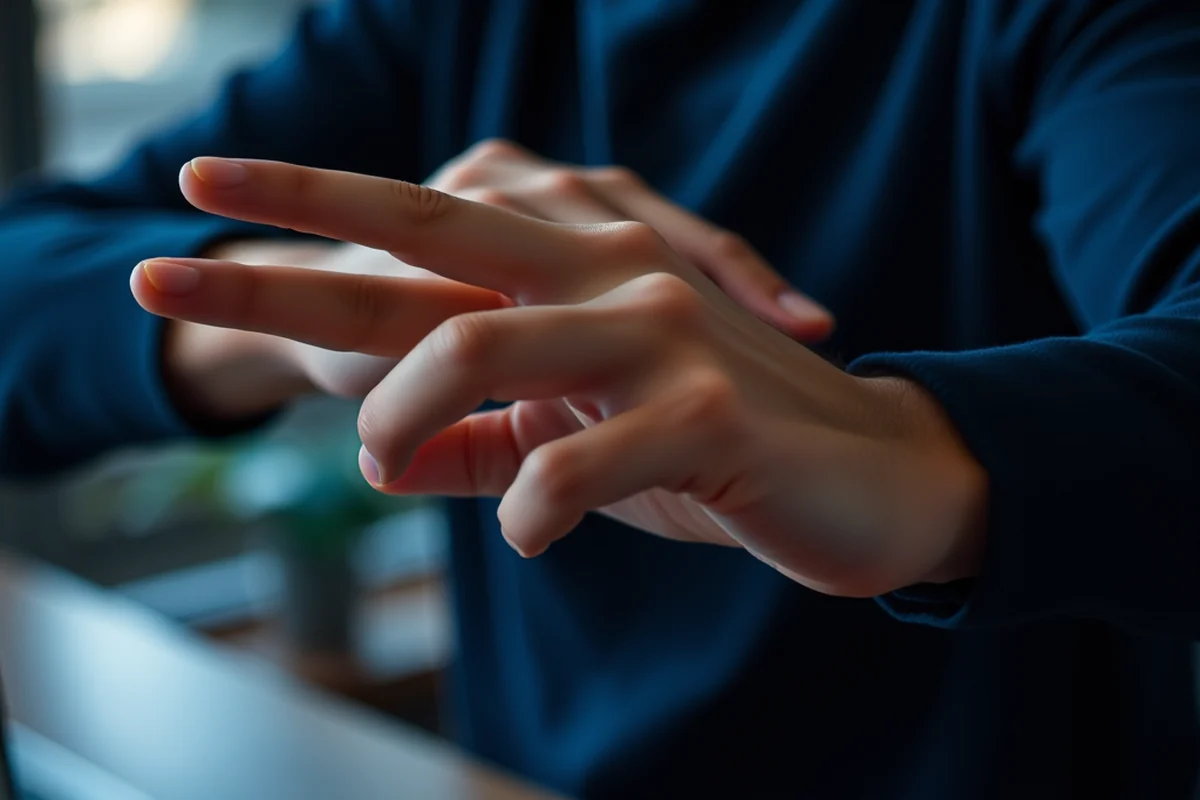
I learned that even the most cramped space can allow for movement. I found that rolling my shoulders, standing on one leg, and even doing small squats while typing kept my body engaged without needing to move my desk or my chair.
Small shifts can make a big difference. I used to sit for 30 minutes, then stand for 5, but now I’ve moved to micro-movements. Every 2 minutes, I do a 10-second stretch — a neck roll, a hip rotation, or a shoulder shrug. These tiny movements help prevent stiffness and keep my body in motion.[4]
The key is to be intentional with your movements. I’ve also started using a small footrest that allows me to switch feet every few minutes. It’s a small change, but it has made a noticeable difference in how I feel after a long work session.
Micro-movements can transform your day — even in the smallest of spaces.
Related: Standing desk habits condition step by step
Adjust Your Desk, Not Your Life
I used a foldable table from the kitchen, placed it on a small rug, and that was my standing desk. It took up no more space than my chair and was completely portable. I also found that a small standing desk converter — a platform that fits on top of a regular desk — was enough for most of my work.
I’ve also used books or boxes to raise my desk to the right height. It’s not as stable as a proper standing desk, but it works well for short sessions. The key is to keep your desk at the right height — around 36 inches for most people — so that your arms can rest at a 90-degree angle.
I recommend starting with a small, adjustable setup and then upgrading as needed. My first standing desk was a $0 setup — just a table from the kitchen. It worked, and it taught me the basics of what I needed for a full setup.
Look around your space and see what you can repurpose as a standing desk. A small table, a box, or even a kitchen counter can work — you don’t need to buy anything expensive.
“I still remember the first time I tried to convert my tiny 4x4 foot home office into a standing desk setup.”— Standhabit editors
Related: Standing desk habits condition guide
The Power of Scheduling: When to Stand, When to Sit

I used to sit for too long and then stand for too long — both were bad for my body. I started using a timer to remind me to switch every 20 minutes. Now I sit for 25 minutes, stand for 15, and take a 5-minute walk. It’s not perfect, but it keeps me on track.
I also found that scheduling my standing time at specific times of the day — like after meetings or before lunch — helped me stay consistent. I used a simple app to track my time and make sure I wasn’t overdoing it.
I noticed that after a few weeks of this schedule, my back pain decreased and my focus improved. I also felt more energized throughout the day. Scheduling your time helps you avoid burnout and keeps your body in a healthy rhythm.
Related: Best standing desk habits by age condition
Standing-Desk Habits That Build Over Time
I started with 5 minutes of standing every hour and gradually increased it to 15 minutes. It took me about three weeks before I could stand for 30 minutes without pain. The key was consistency — even small changes added up over time.
I also found that using a footrest helped me stay balanced and avoid fatigue. It allowed me to shift my weight between my feet, which kept my legs from getting sore. I used a small, adjustable footrest that I could place on the floor or on a chair.
I recommend starting slow and building up over time. You don’t need to stand for an hour right away — just start small and let your body adjust. I’ve found that the most effective standing-desk habits are the ones that are sustainable and build over time.
⚡ 5-Minute Standing Boost
Quick bursts of standing throughout the day to keep your body active and your mind alert.
🪑 Desk-Friendly Setup
A low-impact, easy-to-integrate setup that works with your existing desk and space.
👣 Beginner Standing Routine
A slow, gentle introduction to standing that builds flexibility and strength over time.
📈 Progression Plan
A structured plan that gradually increases your standing time and intensity as you become more comfortable.
🔄 Maintenance Routine
A daily habit that keeps your body conditioned and your standing-desk routine fresh and effective.
| The mistake | Why it happens | The fix |
|---|---|---|
| Standing too high or too low | Incorrect desk height can lead to posture issues, back pain, and fatigue. | Measure your height and adjust your desk so your elbows are at 90 degrees when typing. |
| Ignoring movement breaks | Standing for long periods without breaks can cause muscle strain and fatigue. | Use a timer to remind yourself to move every 20 minutes. Even small stretches can help. |
| Using an unstable surface | Standing on an unstable or wobbly surface can lead to injury and discomfort. | Use a stable, flat surface for your standing desk. Avoid using a wobbly table or a chair without a base. |
| Not warming up before standing | Sudden movement can cause strain on your muscles and joints. | Take a few minutes to warm up before starting your standing session — stretch your legs, shoulders, and back. |
Related: Standing desk habits condition checklist
Standing-desk Habits Condition For Small Spaces
Related: Standing desk habits condition printable
The Role of Accessories in Small-Space Standing Desks
Accessories can make or break your standing desk setup in a small space. Thoughtful choices can enhance your experience without overcrowding your area.
I once filled my 5x5 foot office with too many gadgets—monitor arms, cable organizers, and even a mini-fridge. It was chaos. Eventually, I realized that fewer, well-placed accessories made the space feel more open and functional. A single monitor arm, for instance, can free up desk space and allow for easier adjustments. I now use a minimalist cable management system that keeps everything tucked out of sight but still within reach. This approach has not only saved me physical clutter but also mental stress, as I no longer feel overwhelmed by my setup.
Choosing accessories that serve multiple purposes is key. For example, a desk that doubles as a charging station for my phone and tablet eliminates the need for extra devices. I also use a foldable keyboard tray that I can tuck away when not in use, which helps maintain a clean and uncluttered workspace. These small, intentional choices have made a big difference in how I feel about my standing desk setup. They’ve also increased my productivity, as I no longer waste time searching for misplaced items or struggling with tangled cords.
Another thing I learned is that less is more. I used to think I needed a dedicated standing mat, a footrest, and a posture corrector all at once. But after testing each one individually, I found that a simple anti-fatigue mat was enough to keep me comfortable for hours. It’s easy to get caught up in buying more than you need, but in a small space, every inch counts. Prioritizing quality over quantity has been a game-changer for me, and it’s something I wish I had known earlier in my standing desk journey.
Common Questions
Can I use a regular chair for my standing desk setup?
How long does it take to see results from standing-desk habits?
Is it possible to overdo standing in a small space?
Can I use a standing desk if I have limited mobility?
References
- Easy ways to sit less at work - Kansas State University (hhs.k-state.edu)
- Standing, Stretching and Soaking Up Sun: Healthy Office Habits ... (news.arizona.edu)
- Oklahoma Early Learning Guidelines for Children Ages Three ... (oklahoma.gov)
- Don't Let 'Dead Butt Syndrome' Sneak Up on You | Duke Today (today.duke.edu)
Cite this guide
Standhabit (2026). Standing-Desk Habits for Small Spaces: Tips and Conditions. https://standhabit.com/standing-desk-habits-condition-for-small-spaces/
Feel free to cite or share this guide.
Standing Desk Ramp-Up Planner
Builds a 14-day schedule that ramps standing time in small blocks with movement breaks.
Open it free →