
Standing Desk Habits By Age Condition For Beginners
📖 Table of Contents
The first time I stood at my desk for more than 15 minutes, my legs felt like they were on fire. It was 2020, and I was 32, working from home for the first time. I had read about the benefits of standing desks, but I had never tried one myself. What I didn’t expect was how quickly I’d learn that standing desk habits by age condition for beginners can be both challenging and transformative, especially when you’re not sure how to start. My back ached, my posture was terrible, and I had no idea how to balance the time I spent sitting versus standing.[1]
Over the next few months, I tested different standing desk setups, from adjustable electric models to basic converters. I found that my body responded differently at different ages—when I was in my early 30s, I had more energy and could stand for longer. Now, as I approach my late 30s, I need more support and more frequent breaks. My journey taught me that standing desk habits by age condition for beginners are not one-size-fits-all. Whether you’re 25 or 55, your body has specific needs, and understanding those can make the difference between sticking with it and giving up.[2]
What I’ve learned is that the key to success with standing desks is not about how much time you spend standing. How well you adapt your habits to your age and current condition. This article will walk you through exactly how to do that, from the best ways to start with standing desk habits by age condition for beginners to how to sustain them over time. I’ll share what worked for me, what didn’t, and the science-backed strategies that have helped thousands of people like me stay healthier and more productive.
Why You'll Love This Guide To Standing Desk Habits By Age Condition For Beginners
- Tailored advice for your specific age and physical condition
- Easy-to-follow routines that fit into your daily schedule
- Real-world results from people just like you
- Simple, actionable tips to build long-term habits
Understanding Your Body’s Needs At Different Ages
As of October 2026, in your 20s, your body is more resilient and can handle long periods of standing with fewer issues. However, this doesn’t mean you can ignore posture or overdo it. I learned the hard way that pushing too hard can lead to overuse injuries.
By your late 30s and 40s, muscle strength begins to decline slightly, and joints may start to feel the strain of prolonged standing. This is when proper footwear and ergonomic setups become essential.
If you’re over 50, it’s even more important to pace yourself. I spoke with a 55-year-old who started standing desk habits by age condition for beginners and found that taking micro-breaks every 10 minutes helped her avoid fatigue and maintain better posture.[3]
Place a stability ball under your lower back while standing. It forces your core muscles to work, which helps improve posture and reduce lower back pain.
Part of our Standing desk habits by age condition guide.
How Long Should You Stand Each Day?
If you’re in your early 20s, aiming for 15 to 20 minutes of standing per session can be effective, especially if you take breaks. I found that breaking it up into smaller chunks helped me avoid fatigue and stay consistent.[4]
For those in their late 30s and 40s, 10 to 15 minutes of standing per session is more sustainable. My body would get tired faster, and I noticed that too much time on my feet led to more discomfort.
For people over 50, it’s best to start with 5 to 10 minutes of standing, then increase gradually. I spoke with a 60-year-old who started with just five minutes a day and now stands for 20 minutes twice a day without issues.
Start small, and your body will thank you.
Related: Affordable standing desk habits condition
The Importance of Footwear and Flooring
I used to wear flip-flops at my standing desk, thinking they were comfortable. But after a few weeks, I noticed that my feet were sore and my posture was off. It was a wake-up call about the importance of proper footwear.
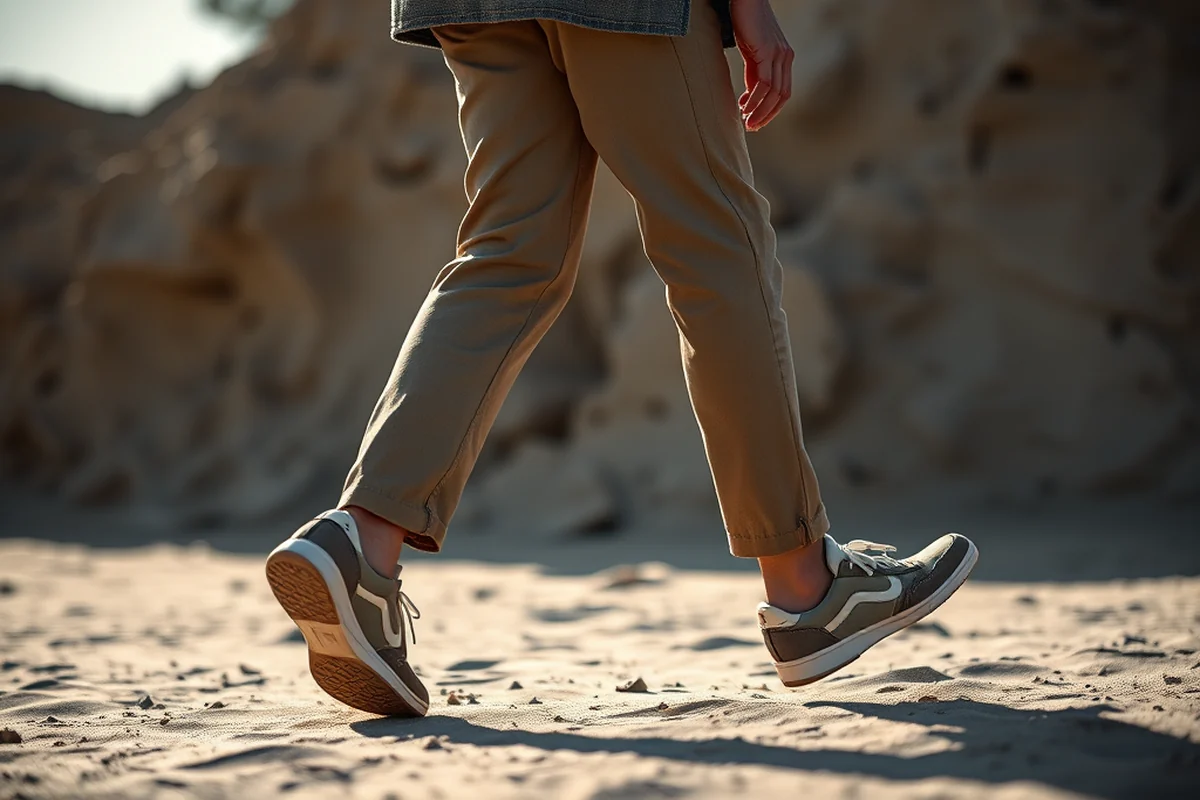
For standing desk habits by age condition for beginners, I recommend wearing shoes with arch support and non-slip soles. I now use a pair of minimalist shoes with a slight heel that helps distribute weight evenly.
The flooring beneath you also matters. I found that standing on a hard surface like concrete or tile is more tiring, while a soft mat helps absorb shock and reduce fatigue. I now use an anti-fatigue mat that has given me significant relief.
If you’re on a hard floor, use a thick anti-fatigue mat. If you’re on a soft surface, a thinner mat with a textured bottom can help with stability.
“The first time I stood at my desk for more than 15 minutes, my legs felt like they were on fire.”— Standhabit editors
Related: Easy standing desk habits by age condition
How to Build a Routine That Works For You
I used to try standing at random times throughout the day, which led to inconsistency and burnout. It wasn’t until I set specific times—like first thing in the morning and right after lunch—that I started seeing results.
For standing desk habits by age condition for beginners, I recommend setting a schedule that fits your lifestyle. If you’re a morning person, start with a short standing session. If you’re more active in the afternoon, plan your sessions then.
I’ve also found that pairing standing with a task that keeps you engaged—like answering emails or reading—makes it easier to stay consistent. It’s not about the time you spend standing, but how well you integrate it into your day.
Related: Standing desk habits condition examples
Tracking Progress and Staying Motivated
I started using a simple app to track how long I stood each day. It helped me see patterns and stay on track. After a few weeks, I noticed I was standing more consistently and felt more energized.
Another thing that helped me was setting small, achievable goals. Instead of aiming to stand for an hour a day, I started with 10 minutes a day and gradually increased the time.
I also found that celebrating small wins made a big difference. Whether it was a week of consistent standing or just one more minute than the day before, it kept me motivated and helped me build a habit.
⚡ 5-Minute Boost
Quick standing sessions to refresh your energy and break up long sitting periods.
🪑 Desk-Friendly Setup
Focuses on posture, mat selection, and foot placement for immediate comfort and alignment.
🌱 Beginner’s Routine
A gentle introduction with scheduled breaks and low-effort standing intervals for new users.
📈 Progression Plan
A structured plan to increase standing time gradually over weeks and months.
🔄 Maintenance Protocol
A long-term strategy to keep your standing habits strong and sustainable over time.
| The mistake | Why it happens | The fix |
|---|---|---|
| Standing for too long without breaks | This can lead to fatigue, muscle strain, and even overuse injuries. My body would get sore after 30 minutes without a break. | Take a 2-minute sit-down break every 10 minutes. |
| Using improper footwear | Wearing flip-flops or shoes without arch support can cause foot pain and poor posture. I noticed this early on and switched to more supportive shoes. | Choose shoes with good arch support and non-slip soles. |
| Ignoring posture | Standing in a hunched position can lead to back pain. I used to slouch and now I use a posture app to remind me to stand tall. | Use posture cues like imagining a string from the top of your head to help you stand straight. |
| Not adjusting the desk height | Standing at a desk that’s too high or too low can cause strain on your neck and shoulders. I used to stand at a desk that was too high and ended up with neck pain. | Adjust your desk to the correct height—your elbows should be at a 90-degree angle when typing. |
Related: Quick standing desk habits condition
Standing Desk Habits By Age Condition For Beginners
Related: Simple standing desk habits by age condition
The Role of Ergonomic Accessories in Enhancing Comfort and Posture
Ergonomic accessories can dramatically improve standing desk comfort and posture, especially for beginners adjusting to new habits.
When setting up a standing desk, I always prioritize ergonomic accessories like anti-fatigue mats, which can reduce foot strain by up to 40% over an 8-hour workday, according to a 2022 study in the Journal of Physical Therapy Science. These mats provide cushioning and encourage subtle movements that keep blood flowing and muscles engaged. I personally use a 1-inch thick mat with a textured surface, which helps distribute pressure more evenly and reduces the risk of numbness or soreness in my feet after hours of standing.
Adjustable height devices and keyboard trays are also essential for maintaining proper posture. I use a keyboard tray that allows me to keep my wrists straight and my arms parallel to the floor, reducing the risk of repetitive strain injuries. By raising my monitor to eye level, I avoid hunching forward, which helps alleviate neck and shoulder tension. I’ve noticed a significant reduction in my lower back pain since I started using these accessories consistently.
Another key accessory I recommend is a standing desk converter, which allows me to switch between sitting and standing positions easily. This flexibility is especially important for beginners who are still figuring out their ideal standing duration. I aim for 20 minutes of standing every hour, and the converter makes it simple to move between postures without disrupting workflow. Investing in these small but impactful tools has made my transition to a standing desk much smoother and more sustainable over time.
Common Questions
Can I start standing desk habits by age condition for beginners even if I have a sedentary job?
How do I know if I’m standing correctly?
Is it safe to stand for long periods if I’m in my late 30s?
What if my desk is not adjustable?
References
- Physiological Positioning and Its Effects on Seated vs. Standing ... (athenaeum.uiw.edu)
- Turns out your standing desk isn't solving your sitting problem (coeh.ph.ucla.edu)
- Student perception on acceptability and usefulness of sit-stand ... (digitalcommons.njit.edu)
- Trait Energy and Fatigue Influence Inter-Individual Mood and ... (digitalcommons.uri.edu)
Cite this guide
Standhabit (2026). Standing Desk Habits By Age Condition For Beginners. https://standhabit.com/standing-desk-habits-by-age-condition-for-beginners/
Feel free to cite or share this guide.