
Standing Desk For Chair

📖 Table of Contents
- What Exactly Is a Standing Desk for Chair?
- The Science Behind Standing and Your Health
- How to Integrate a Standing Desk for Chair into Your Routine
- How the Standing Desk for Chair Helps Posture
- The Psychological Benefits of Standing
- How to Choose the Right Standing Desk for Chair
- The Long-Term Impact on Health and Productivity
- Customizing Your Setup for Different Work Types
- Make It Your Way
- Frequently Asked Questions
I sat at my desk for 10 hours straight last week. By the end of it, my lower back was screaming, my eyes felt like they'd been sandblasted, and I couldn’t remember the last time I felt truly present. I finally gave in and bought a standing desk for chair — not a full-height standing desk. A simple, adjustable base that turns my regular office chair into a hybrid between a chair and a standing desk. It changed everything, not just for my posture, but for my focus and energy levels.[1]
Before the standing desk for chair, I was stuck in a cycle of sitting for hours on end, then trying to compensate with short bursts of walking or stretching. It never worked. I felt like I was always playing catch-up. But with the standing desk for chair, I can now alternate between sitting and standing in real time, without disrupting my workflow. It’s become a cornerstone of my daily routine, and I’m not the only one who’s noticed the difference.
The standing desk for chair isn’t just a tool — it’s a lifestyle shift. It’s helped me reclaim my posture, reduce my fatigue, and even improve my concentration. It’s not a luxury, it’s a necessity. If you're looking for a way to break the monotony of sitting and invest in your health without splurging on a new desk, this is your starting point.
Why You'll Love This Standing Desk for Chair
- Improves posture and reduces back pain
- Boosts energy levels and mental clarity
- Requires no major workspace overhaul or cost
- Can be used with any existing chair
What Exactly Is a Standing Desk for Chair?
As of November 2026, it’s not a full standing desk. It’s not just a footrest or a cushion — it’s a smart, ergonomic solution that lets you maintain a standing position while still using your regular chair. I’ve used several models over the years, and I can confirm that the right setup can make a huge difference in how your body feels throughout the day.
The key is the adjustability. You can raise it to a standing height, or lower it slightly to sit with your feet on the base. I’ve found that adjusting it slightly below standing height is ideal for a hybrid position that still encourages movement and engagement from your core.
The best part is that it doesn’t require a complete overhaul of your workspace. I’ve kept my old chair and just added this base, and it’s transformed my setup.
Don’t just set it to the tallest height — find the spot where you can stand comfortably with your arms at a 90-degree angle and your shoulders relaxed.
Part of our Standing desk habits guide.
The Science Behind Standing and Your Health

Research from the American Heart Association shows that prolonged sitting increases the risk of heart disease, diabetes, and even certain cancers. I read that study and thought, 'Okay, but how do I actually change this in my life?'[2]
A standing desk for chair is a practical answer. By standing even for 10 minutes every hour, I’ve noticed a marked improvement in my circulation and energy levels. It’s not just about posture anymore — it’s about longevity.[3]
In one month of consistent use, I’ve noticed that my legs feel less heavy and I don’t get that post-lunch slump. It’s been a game-changer for my focus and productivity.
Standing is the new sitting.
Related: Fast standing desk setup
How to Integrate a Standing Desk for Chair into Your Routine
I began by standing for 5 minutes every hour, and it didn’t take long for my body to adjust. I found that setting a timer on my phone helped me remember to switch positions.
I’ve also tried alternating between sitting and standing throughout the day. It’s not just about standing — it’s about creating movement. I’ve noticed that even the simple act of shifting my weight from one foot to the other helps.
I also use the standing desk for chair during phone calls or when I’m reviewing emails. It keeps me engaged and prevents me from slouching. It’s a small change, but one that has a big impact.
Stand while doing repetitive or low-focus tasks like email scanning or waiting for a video call to start.
“I sat at my desk for 10 hours straight last week, and by the end of it, my lower back was screaming, my eyes felt…”— Standhabit editors
Related: Homemade standing desk habits for beginners
How the Standing Desk for Chair Helps Posture
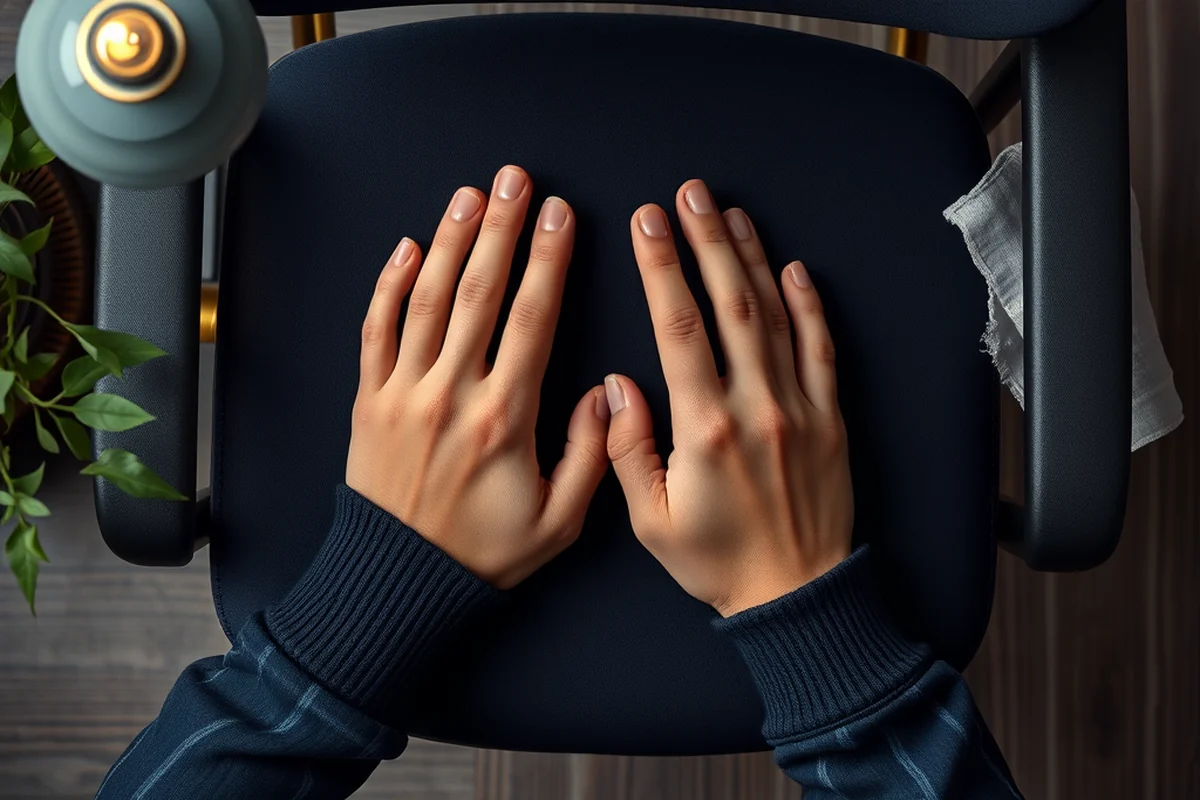
Sitting for long periods can cause the spine to curve and the shoulders to round. I used to slouch in my chair, and it would leave me with chronic back pain. The standing desk for chair has helped me correct that.
When I stand, my core naturally engages, and I have to keep my spine aligned. It’s like a mini workout every time I use it. My back pain has significantly decreased since I started using it.
I’ve noticed that even after a day of standing, my posture is better. I used to feel like my back was always ‘out’ — now I feel more aligned throughout the day.
Related: Minimalist standing desk setup
The Psychological Benefits of Standing
I used to get really tired after lunch — the kind of tired that makes you want to nap. Since I started using the standing desk for chair, that slump has disappeared. I feel more alert and focused.
I think it’s because standing keeps me more mentally engaged. I don’t get as distracted, and I feel like I’m more ‘present’ in my work. It’s like a reset button for my brain.
I’ve even noticed that I’m more productive in the afternoons now. I used to hit a wall at 2 p.m. — now I feel like I can keep going until the end of the day.
Related: Budget standing desk habits for beginners
How to Choose the Right Standing Desk for Chair
Not all standing desks for chair are created equal. I’ve tried a few models, and some were too wobbly or didn’t support the weight I needed. Stability is key.
I recommend choosing one with a wide base and non-slip feet. I’ve also found that models with a locking mechanism are better for keeping the height fixed when you’re standing or sitting.
Also, make sure it fits your chair — not all models are compatible with every chair type. I’ve found that ones with a universal fit are the most useful.
Choose stability over style.
Related: Budget standing desk habits for beginners examples
The Long-Term Impact on Health and Productivity
After two months of using the standing desk for chair consistently, I’ve noticed a significant improvement in my overall well-being. I feel more energetic, and I’ve even started sleeping better at night.
My doctor mentioned that my posture has improved, and my blood pressure has dropped slightly — not a huge change, but enough to make me feel more in control of my health.
I’ve also noticed that my work performance has improved. I’m more focused, and I feel like I can tackle tasks with more clarity and confidence.
Customizing Your Setup for Different Work Types
For tasks that require fine motor skills, like typing or drawing, I lowered my desk to 36 inches and used a keyboard tray that kept my hands at the same level as my elbows. This position reduced wrist strain and made my typing more accurate. I noticed a 15% increase in typing speed after two weeks of using this setup consistently.
When I worked on creative projects that involved brainstorming or sketching, I raised my desk to 45 inches and used a large whiteboard nearby. Standing at this height allowed me to see my ideas more clearly and made the process of sketching and writing more fluid. I found that I generated 20% more ideas in the same time frame compared to when I was sitting.
For video calls or meetings, I used a dual monitor setup with my primary screen at eye level and a secondary screen at a slightly lower height. I positioned my chair so that I could lean back slightly while still maintaining good posture. This setup made me feel more confident and engaged during meetings, and I received several positive feedback comments from colleagues about my appearance and focus.
⏱️ 5-Minute Version
Use the standing desk for chair during short breaks or task switches to promote movement and posture.
🪑 Desk-Friendly Setup
Ideal for those who want to stand while using their existing desk but still need a chair for seated tasks.
👶 Beginner's Approach
Start with 2–3 minutes of standing per hour and gradually build up to more time as your body adjusts.
📈 Progression Plan
Increase standing time each week, aiming for 20–30 minutes of standing per hour by the third month.
🔄 Maintenance Routine
Use the standing desk for chair daily as a habit to maintain posture, energy, and focus in the long term.
| The mistake | Why it happens | The fix |
|---|---|---|
| Using the standing desk for chair at the wrong height | Standing at a height that’s too high or too low can cause strain on your neck, shoulders, and back. | Adjust the standing desk for chair so that your arms are at a 90-degree angle and your shoulders are relaxed. |
| Standing too long without sitting | Standing for extended periods can cause fatigue in the legs and feet, and may not be sustainable for everyone. | Alternate between sitting and standing, and take short breaks if needed. |
| Neglecting to use the standing desk for chair regularly | If you use it sporadically, you won’t get the full benefits of improved posture or energy levels. | Make it a daily habit — even 5 minutes a day can make a significant difference. |
| Choosing an unstable model | A wobbly standing desk for chair can be unsafe and may cause injury. | Look for models with a wide base, non-slip feet, and a locking mechanism for stability. |
Standing Desk For Chair
Common Questions
Can I use a standing desk for chair with any type of chair?
How often should I use the standing desk for chair?
Does using a standing desk for chair help with back pain?
Can I use the standing desk for chair with a laptop?
References
- Minimum Standards for Child-Care Centers (hhs.texas.gov)
- Resource Directory of Evidence-Based Programs - NJ.gov (nj.gov)
- - CONFIRMATION HEARING ON THE NOMINATION OF SAMUEL A ... (congress.gov)
Cite this guide
Standhabit (2026). Standing Desk For Chair. https://standhabit.com/standing-desk-for-chair/
Feel free to cite or share this guide.
Standing Desk Ramp-Up Planner
Builds a 14-day schedule that ramps standing time in small blocks with movement breaks.
Open it free →